
Use Cases
Use caseRetail product authenticity
Explore a brand’s product statement, distribution history and warranty status—then compare them with the physical item.
Explore use cases ↗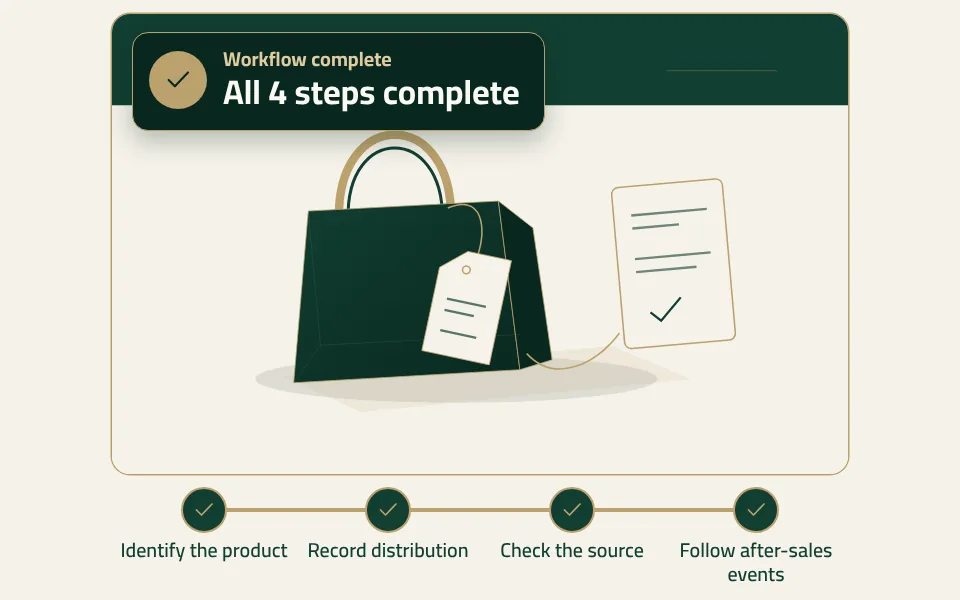
- Identify the product
- Record distribution
- Check the source
- Follow after-sales events
How the record holds together
- Identity
- Channel
- Warranty
Who this is for
Brand owners, authorised distributors, retailers, marketplaces and customer-service teams.
The operational challenge
Counterfeits and grey-market goods erode trust and margin. Customers have no reliable way to check a product, and support teams cannot see its history.
A proposed workflow
- Step 01
Identify the product
Assign each product or batch a digital identifier at production.
- Step 02
Record distribution
Record distribution to authorised channels.
- Step 03
Check the source
Customers scan to check the issuer and status, then compare the record with the physical product.
- Step 04
Follow after-sales events
Track warranty, resale and returns on the same record.
What is recorded
Product identity, batch, authorised distribution events and after-sale status such as warranty activation or return.
Who verifies
The brand is accountable for its identity statement and corrections. Customers and retailers check the source and status, while trained staff investigate mismatches and disputed returns.
Customer choice and privacy
Keep buyer details in authorised brand systems. Separate warranty use from marketing consent, minimise scan data and avoid exposing previous owners in public resale histories.
Physical and digital together
Evaluate tamper-evident labels, NFC or QR pointers with physical inspection. Codes can be copied and goods substituted; no label or sensor integration is established by this journey.
Continue the journey
FAQ
Questions, answered
What if a label is copied?
A copied code may retrieve a valid record for the wrong item. Compare physical details and escalate mismatches; any scan-pattern detection needs separate implementation and privacy review.
Does it work for resale?
A proposed resale view can share permitted product and warranty status. Declared ownership needs supporting evidence and does not itself establish legal title.
YOUR NEXT STEP
Build your next step
on trust.
Find the right starting point for your assets, records and business.
Find your use case