
RMOZ / platform
Give assets a digital foundation.
Define the represented rights, issuer authority and review rules before designing a token. Web3 records cannot create missing ownership or permissions.
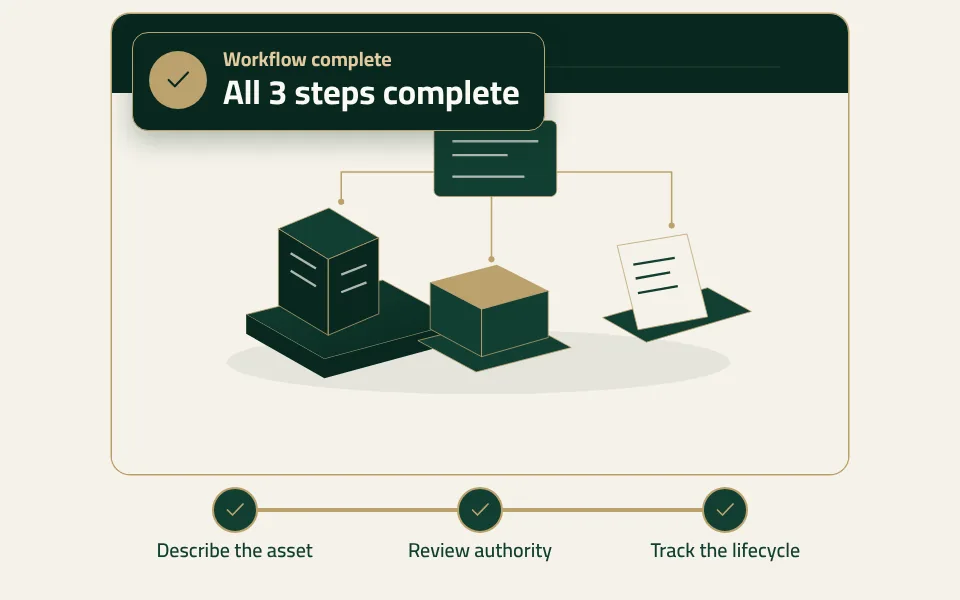
- Describe the asset
- Review authority
- Track the lifecycle
Product walkthrough
From input to a useful record
- Step 01
Describe the asset
Link its identifier to evidence and the rights being represented.
- Step 02
Review authority
Confirm issuer authority, eligibility and transfer restrictions.
- Step 03
Track the lifecycle
Record approved actions, corrections and closure; a token alone is not legal title.
Token lifecycle
From evidence to redemption.
- 01
Review evidence
Confirm the asset and its legal right.
- 02
Approve issuance
An authorised issuer releases tokens.
- 03
Apply transfer rules
Eligibility and lock-ups enforced.
- 04
Update status
Corporate actions and changes recorded.
- 05
Redeem or cancel
Close the lifecycle cleanly.
Separate a record from a right
A token can represent an identifier, a claim or a permission, and those meanings are not interchangeable. Each design specifies the underlying asset, the evidence supporting it and the legally enforceable right, if any, that the token represents.
Map the accountable parties
The issuer, custodian, record administrator and independent verifier each have distinct duties. Every design sets out who checks eligibility, safeguards the underlying asset, authorises transfers and investigates discrepancies.
Model the entire lifecycle
The lifecycle covers evidence review, issuance approval, transfer restrictions, status changes and redemption or cancellation. Exceptions such as lost keys, disputed ownership or a damaged asset have documented procedures.
Validate utility and regulatory boundaries
Test whether the record improves reconciliation without overstating title, liquidity or value. Financial applications need verified licensed parties and permissions; this pilot does not establish an investment offering, custody or redemption service.
Continue the journey
Continue the journey
FAQ
Questions, answered
Does tokenization establish legal ownership?
Not by itself. Ownership depends on applicable law, contractual terms and the authority of the issuer. A digital representation cannot replace missing rights or evidence.
Can assets be traded or redeemed through RMOZ?
No. This pilot does not provide trading, custody, redemption or investment services. Any future financial scope requires separate licensed providers, agreements and regulatory approval.
YOUR NEXT STEP
Build your next step
on trust.
Find the right starting point for your assets, records and business.
Find your use case