
RMOZ / platform
Clear rules for every step.
Model approvals and exceptions before automating agreed rules. Retain human authority for disputes, suspension and consequential decisions.
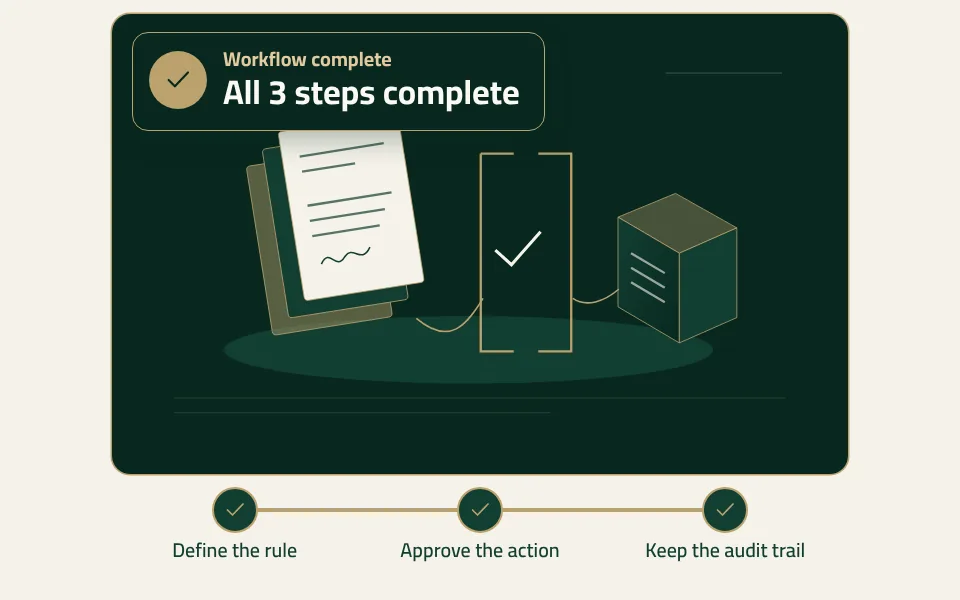
- Define the rule
- Approve the action
- Keep the audit trail
Product walkthrough
From input to a useful record
- Step 01
Define the rule
Specify the action, required evidence and authorized roles.
- Step 02
Approve the action
Check permissions and prerequisites before changing a record.
- Step 03
Keep the audit trail
Record the outcome and exceptions; legal signatures need an approved provider.
Begin with a state model
Workflow owners and engineers should describe valid states, permitted transitions and the evidence required for each transition. This exposes ambiguous approvals before they become code. A smart contract is an implementation option, not a substitute for a clear operating policy.
Treat external facts as a trust boundary
Software cannot directly know whether an inspection happened or an asset exists. Any source of external data needs an accountable operator, freshness rules and dispute handling. Incorrect input can trigger a perfectly executed but substantively wrong automated action.
Review permissions and change controls
Every contract is reviewed for privileged actions, upgrade authority, key loss, emergency suspension and reconciliation after failure. Simulation, independent review and formal deployment approval are part of each release.
Measure dependable behavior
Test unauthorised calls, repeated requests and interrupted workflows. If AI proposes an action, require an authorised human decision before a consequential transition. Preserve reasons and an appeal route; ordinary application code may be simpler than a contract.
Continue the journey
FAQ
Questions, answered
How are smart contracts assured?
A production design requires specification tests, independent security review and verified deployment details. The existing lifecycle pilot is not assurance for every proposed contract or business workflow.
Can automation remove the need for legal terms?
No. Legal obligations, mistakes, disputes and remedies need separate treatment. Code execution does not by itself determine legal validity or fairness.
YOUR NEXT STEP
Build your next step
on trust.
Find the right starting point for your assets, records and business.
Find your use case