
RMOZ / solutions
One product. A connected history.
Plan a readable product history with attributed origin, repair and handover records. Separate approved public details from private supplier evidence.
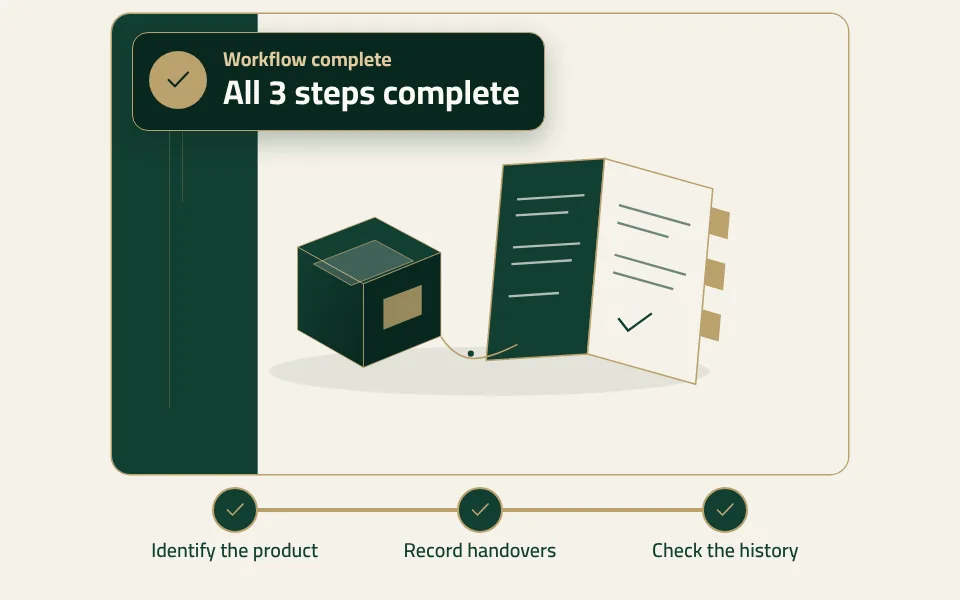
- Identify the product
- Record handovers
- Check the history
Product walkthrough
From input to a useful record
- Step 01
Identify the product
Link a serial or batch identifier to source documents.
- Step 02
Record handovers
Attribute inspection and custody events to the responsible parties.
- Step 03
Check the history
Show permitted origin and status details; physical checks remain necessary.
Make fragmented product information usable
Manufacturers, distributors, repair teams and buyers need different views of the same product. A product passport connects identifiers with the relevant records and distinguishes manufacturer statements, third-party assessments and events recorded by later custodians.
Choose the right level of identity
Decide whether the record represents a model, batch or individual item. Define how labels are attached, replaced and checked. A QR code is only a pointer: copied labels and substituted goods remain physical risks that need inspection and exception procedures.
Record a governed lifecycle
A reference flow begins with authorized product information, then adds dispatch, receipt, repair or retirement events. Each participant receives limited write permissions. Public views should exclude trade secrets and personal data, while authorized users can inspect the evidence relevant to their role.
Evaluate traceability without overstating compliance
Test current instructions, affected-batch lookup and missing events. Review market and product-category requirements separately; a pilot passport is not proof of regulatory conformity. Define who approves repairs, corrected claims and retirement.
Continue the journey
FAQ
Questions, answered
Does scanning a label prove authenticity?
No. A scan can retrieve a record, but the relationship between that record and the physical item must be independently controlled and checked.
Must every lifecycle event be public?
No. Public information is separated from restricted operational evidence, and personal or commercially sensitive data is kept to a minimum.
YOUR NEXT STEP
Build your next step
on trust.
Find the right starting point for your assets, records and business.
Find your use case