
RMOZ / platform
Know the source. Check the record.
Explore credentials with accountable issuers, selective disclosure and a correction route. A signature identifies a statement; authority still needs checking.
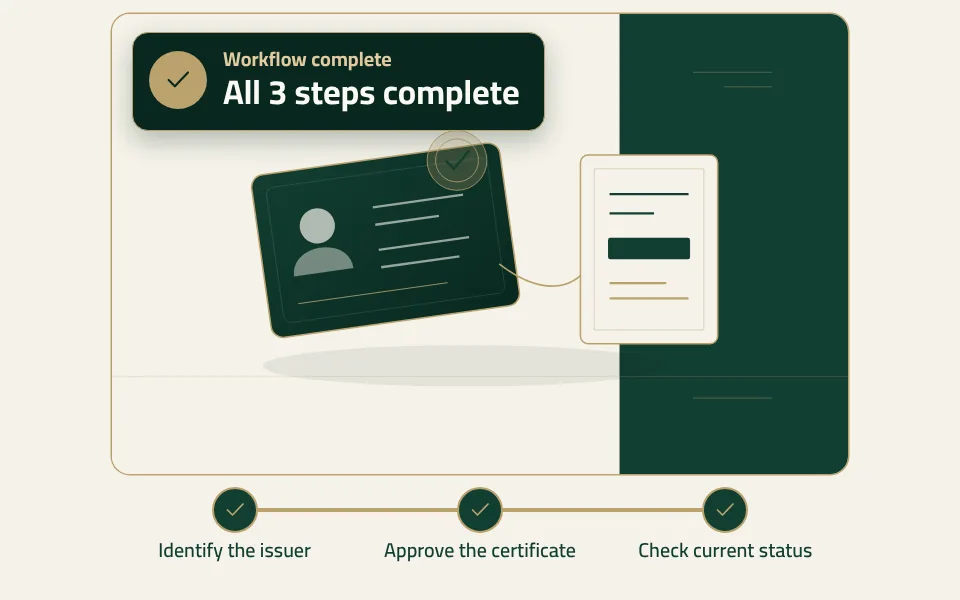
- Identify the issuer
- Approve the certificate
- Check current status
Product walkthrough
From input to a useful record
- Step 01
Identify the issuer
Establish who is authorized to issue the credential.
- Step 02
Approve the certificate
Link the claim to supporting evidence and the approval record.
- Step 03
Check current status
Verify issuer and revocation status while limiting personal-data disclosure.
Reduce repeated checks without widening exposure
Education providers, professional bodies and enterprise access teams repeat the same evidence checks. Each RMOZ credential defines the exact claim, its intended audience and the minimum information a verifier needs to see.
Establish issuer authority
A signature can show that a key signed a claim; it does not establish that the signer is qualified to make it. An issuer register, approved verification procedures and clear responsibility for incorrect claims are necessary design decisions.
Plan issuance, presentation and revocation
The flow checks source evidence, authorises issuance, lets the holder present the credential and confirms its current status. Expiry, revocation, replacement and issuer-key compromise are handled as part of the design.
Keep personal data proportionate
Keep sensitive source evidence outside public ledgers, with a defined purpose, legal basis and retention period. Even hashes and status queries can expose identity. Provide accessible review for incorrect or unavailable results; a failed lookup is not a reason to label someone fraudulent.
Continue the journey
Continue the journey
FAQ
Questions, answered
Is this a national identity or KYC service?
No. The proposed credential references an issuer’s specific claim. It does not establish national identity, complete regulated KYC or independently prove that the claim is true.
Can a credential be corrected?
Yes. Credentials can be revoked or replaced by their issuer, and the full status history is preserved for verifiers.
YOUR NEXT STEP
Build your next step
on trust.
Find the right starting point for your assets, records and business.
Find your use case